

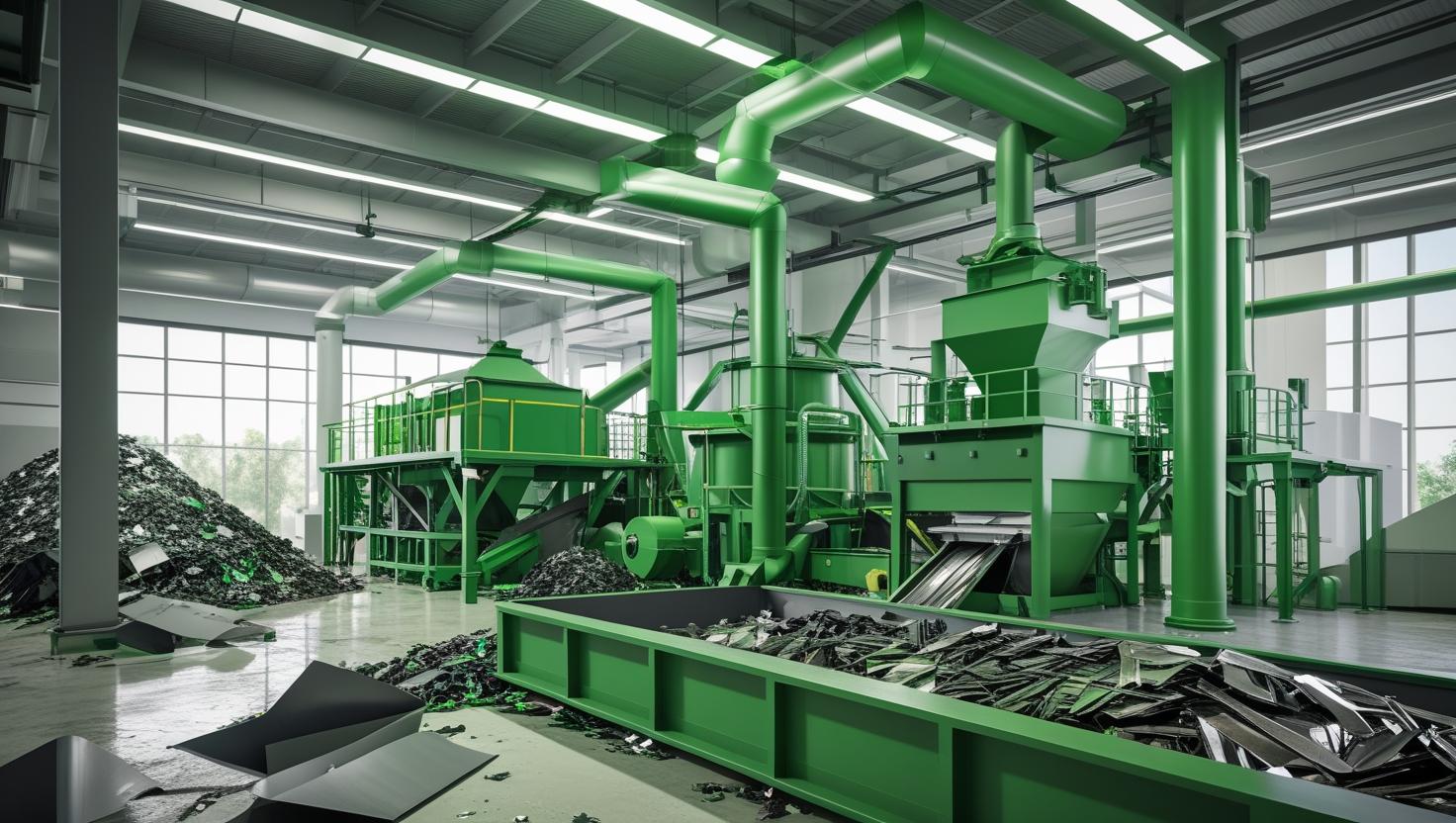
As a leading provider of advanced recycling technologies, we see lithium-ion batteries not as waste, but as a highly valuable urban resource. These power sources are the backbone of the modern world—driving everything from electric vehicles to grid storage systems. However, their end-of-life management remains one of the most critical challenges—and opportunities—in the sustainable energy sector. For engineering firms like ours, the goal is clear: to develop efficient, safe, and scalable solutions that close the loop on critical raw materials.
The economic and environmental case for recycling is undeniable. Lithium, cobalt, and nickel are finite, energy-intensive to mine, and subject to volatile global supply chains. By recovering these metals from spent batteries, we reduce our dependence on virgin mining, lower carbon footprints, and create a stable domestic supply of raw materials. From a process engineering perspective, this isn’t just waste management; it’s high-grade material refining.
Our Core Technologies: From Black Mass to Battery-Grade Metals
In our facilities, recycling begins with safe deactivation and mechanical preprocessing. We transform spent battery modules into a fine powder known as “black mass,” which contains all the valuable metals. From there, we employ two primary, complementary recovery routes:
- Pyrometallurgy (Smelting): This high-temperature process efficiently separates metals by melting the black mass. It is robust, handles mixed feedstocks well, and recovers cobalt and nickel in a metallic alloy, which can then be refined.
- Hydrometallurgy (Chemical Leaching): For higher purity and full material recovery, we use targeted chemical solutions to selectively dissolve and precipitate individual metals. This allows us to achieve battery-grade lithium, cobalt, and nickel sulfates, which can be fed directly back into new battery production.
By integrating these methods, we offer a flexible and robust platform that maximizes recovery rates while minimizing residual waste.
Addressing Industry Challenges with Innovation
We understand that the path to industrial-scale recycling is not without its engineering hurdles. Safety is our top priority; thermal runaway and hazardous electrolytes demand rigorous process control and advanced automation. Furthermore, the economic viability of recycling has historically been a barrier. That’s why our R&D team continuously works to optimize energy consumption, reduce chemical usage, and improve the selectivity of our separation processes.
With tightening regulations and ambitious ESG (Environmental, Social, and Governance) targets across Europe and beyond, the demand for reliable recycling infrastructure is surging. Our technology is designed to be modular and adaptable, allowing us to scale with the rapidly growing volume of end-of-life batteries expected in the coming decade.
Partner with Us for a Sustainable Future
For us, recycling is not an afterthought—it is a core engineering discipline. We are committed to transforming the linear “take-make-dispose” model into a true circular economy. By investing in advanced recovery technologies today, we are building a cleaner, more resource-secure tomorrow.
If you are a manufacturer, fleet operator, or waste management authority looking for a reliable technical partner, we invite you to explore how our solutions can turn your battery waste into a strategic asset.
 Previous Post
 Next Post