

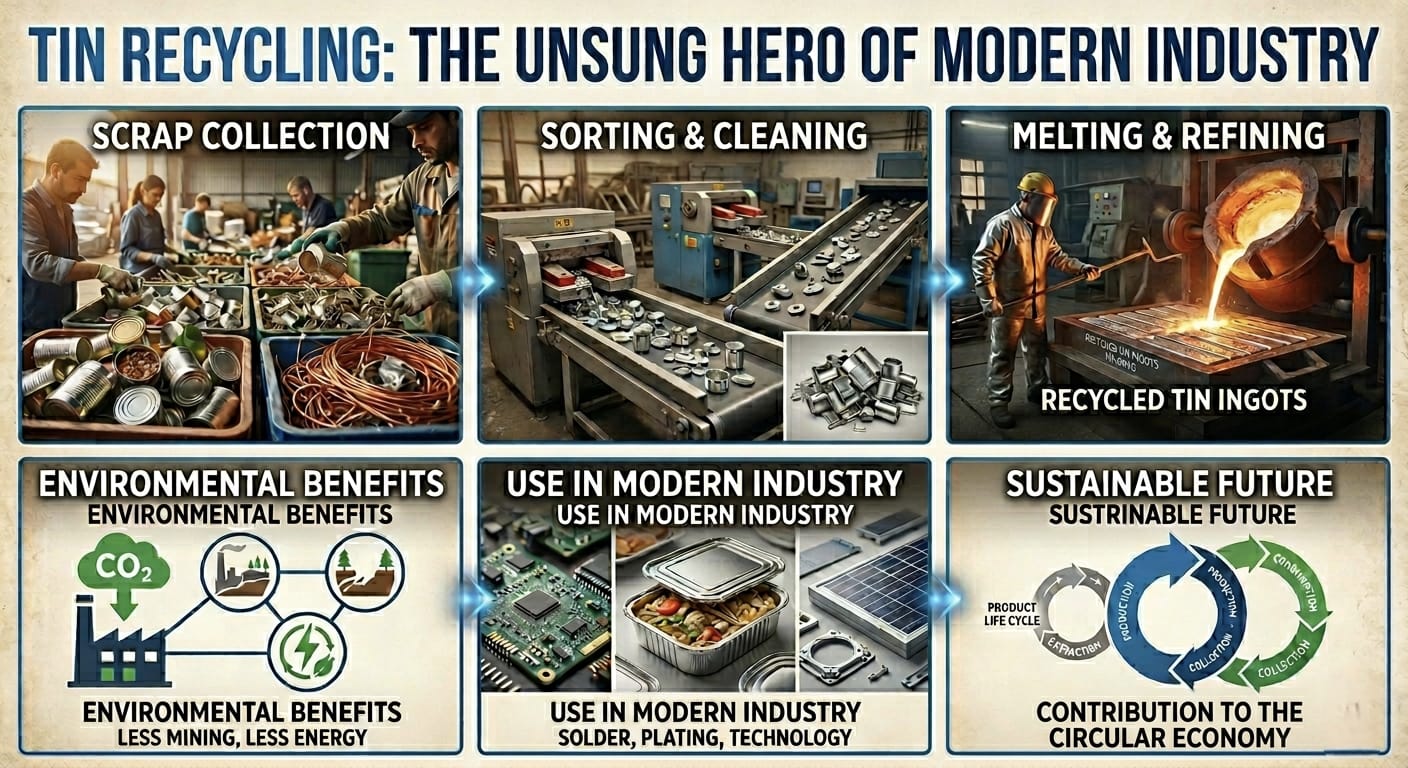
While it may not grab headlines like gold or lithium, tin forms the backbone of modern industry. From the protective coating on food cans to the solder connections in electronic circuits, this silvery-white metal is everywhere in our daily lives. But tin is not an unlimited resource. Primary production is energy-intensive and often linked to environmentally and socially challenging conditions in mining regions. That’s why recovering and reusing tin is no longer just an economic choice—it’s becoming an ethical and ecological necessity.
So how is tin recovered, and why does it matter so much?
Tin recycling primarily targets industrial waste, like solder dross from electronics manufacturing or tinplate scraps from can production. Used tin cans (typically steel cans with a thin tin coating) are another key source. The recovery process varies depending on the material. For high-grade tin alloys, simple re-melting and refining is often enough. For more complex streams like e-waste or mixed metals, advanced techniques like electrolytic refining or chemical leaching are used to separate the tin from other materials.
Closing this loop has real, tangible benefits. Recycling tin can save up to 85–90% of the energy required for primary production. That drastically cuts related carbon emissions and conserves valuable natural resources. It also stabilizes supply chains, reducing dependence on geopolitically sensitive mining regions. By keeping valuable metals out of landfills, it turns waste into a strategic resource. As demand for electronics keeps rising, so does the need for tin. A strong recycling infrastructure isn’t optional anymore—it’s vital to powering our technological future without plundering the planet.
 Previous Post
 Next Post